Overview

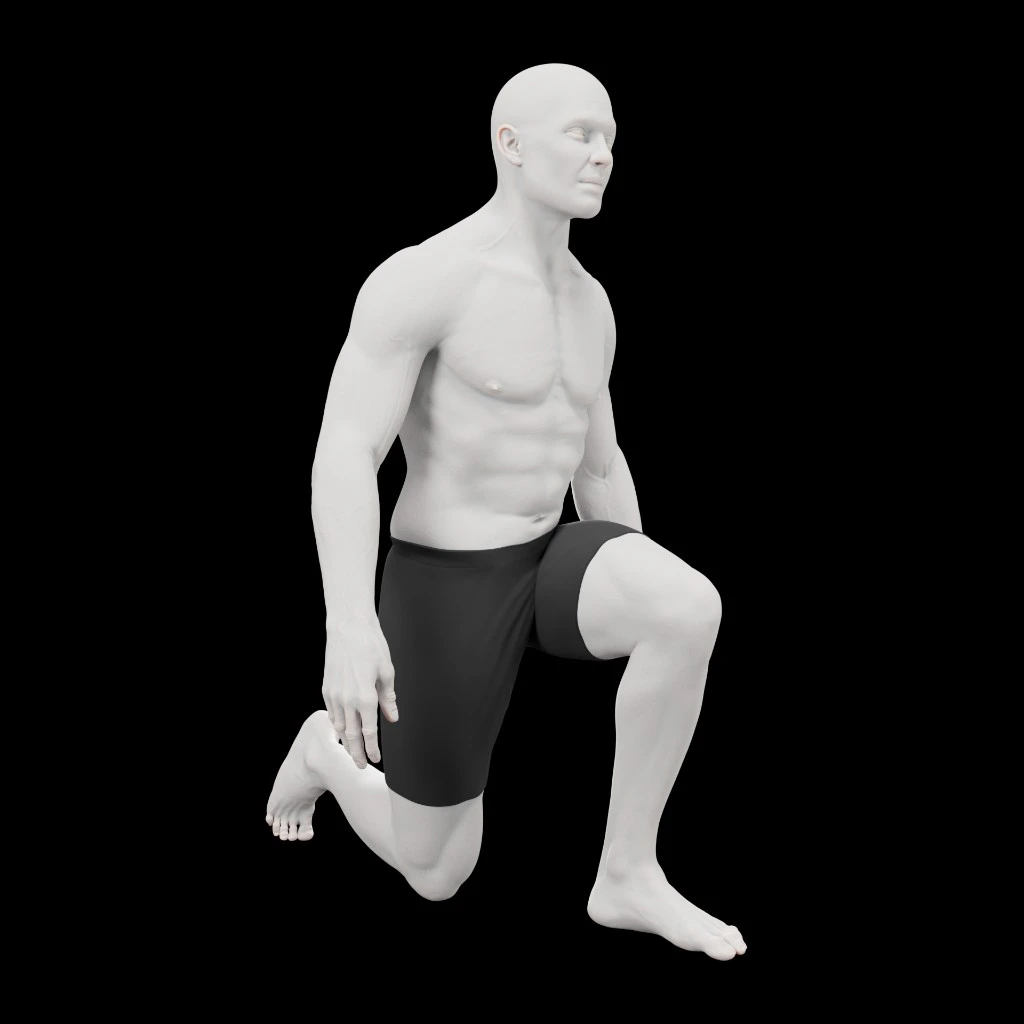
The side lunge is a lateral movement assessment that evaluates an athlete’s ability to step to the side with proper form, stability, and lower extremity control. This movement provides valuable information about hip abductor and adductor strength, lateral knee stability, and frontal-plane movement patterns. Example image of a man doing a side lunge

Instructions

Stand with feet hip-width apart in a neutral stance. Step laterally with one leg, shifting your weight onto the stepping leg and lowering into a lateral squat while keeping the trunk upright and the opposite leg straight. Drop down as far as possible while maintaining heel contact on the stepping foot. Push back through the stepping foot to return to the starting position. Perform at a natural, controlled pace without pausing at the bottom.

Dimensions

Required inputs for processing:
  • Footedness: [‘right’, ‘left’] — indicates the stepping leg and direction

Output Variables

Events

EventShort DescriptionColumn Name
InitiationStart of the lunge when the athlete begins stepping laterally.lunge_side_initiation_frame
BottomInstant of maximum lunge depth (lowest pelvis position).lunge_side_bottom_frame
EndEnd of the movement when the athlete returns to standing.lunge_side_end_frame

Phases

PhaseStartEnd
Eccentric (Descent)InitiationBottom
Concentric (Ascent)BottomEnd

Knee Metrics

MetricUnitsShort DescriptionColumn Name
Right Valgus BottommRight knee medial displacement at bottom.lunge_side_right_valgus_bottom
Left Valgus BottommLeft knee medial displacement at bottom.lunge_side_left_valgus_bottom

Movement Strategy Metrics

MetricUnitsShort DescriptionColumn Name
Right Eccentric Hip-Knee DominanceratioRight lead leg hip-knee dominance during descent (0=hip, 1=knee).lunge_side_right_eccentric_hip_knee_dominance
Left Eccentric Hip-Knee DominanceratioLeft lead leg hip-knee dominance during descent (0=hip, 1=knee).lunge_side_left_eccentric_hip_knee_dominance
Right Concentric Hip-Knee DominanceratioRight lead leg hip-knee dominance during ascent (0=hip, 1=knee).lunge_side_right_concentric_hip_knee_dominance
Left Concentric Hip-Knee DominanceratioLeft lead leg hip-knee dominance during ascent (0=hip, 1=knee).lunge_side_left_concentric_hip_knee_dominance

Trunk and Joint Angle Metrics

MetricUnitsShort DescriptionColumn Name
Max Right Trunk LeandegMaximum rightward lateral trunk lean during lunge.lunge_side_max_right_trunk_lean
Max Left Trunk LeandegMaximum leftward lateral trunk lean during lunge.lunge_side_max_left_trunk_lean
Max Right Hip Flexion AngledegMaximum right hip flexion angle during lunge.lunge_side_max_right_hip_flexion_angle
Max Left Hip Flexion AngledegMaximum left hip flexion angle during lunge.lunge_side_max_left_hip_flexion_angle
Max Right Knee Flexion AngledegMaximum right knee flexion angle during lunge.lunge_side_max_right_knee_flexion_angle
Max Left Knee Flexion AngledegMaximum left knee flexion angle during lunge.lunge_side_max_left_knee_flexion_angle
Max Right Ankle Flexion AngledegMaximum right ankle dorsiflexion during lunge.lunge_side_max_right_ankle_flexion_angle
Max Left Ankle Flexion AngledegMaximum left ankle dorsiflexion during lunge.lunge_side_max_left_ankle_flexion_angle

Distance Metrics

MetricUnitsShort DescriptionColumn Name
Lunge DepthmVertical pelvis displacement from baseline to bottom.lunge_side_lunge_depth
Stance LengthmAnterior–posterior distance between feet at bottom.lunge_side_stance_length
Stance WidthmMedial–lateral distance between feet at bottom.lunge_side_stance_width

Notes

  • Kinematic data typically captured at 60 Hz for lunges
  • Stepping leg metrics (valgus, hip-knee dominance) are reported for the stepping leg only; the non-lead side is set to NaN
  • Trunk and joint angle metrics are computed over the full lunge window (Initiation to End)
  • Stance width is the primary distance measure for the side lunge; stance length is expected to be near zero